
Walking Back In: Returning to Meaningful Community Activity
Blog post by Ollie Ayres, How Are You Cambridgeshire & Peterborough’s Digital Lead

Before I share my experience, it is important to provide some context. I have lived with symptoms of Schizoaffective Disorder since I was 14 and was formally diagnosed at 16. Like many long-term health conditions, there have been periods of stability and periods where symptoms have been more challenging. This recent chapter was one of those more difficult times, and my journey back into meaningful community activity became an important part of my recovery.
After a period of poor mental health, there is a moment that nobody really talks about. Not the crisis, the diagnosis, or even the recovery itself. It’s the moment when you stand outside a familiar door and wonder whether you can walk back through it.
During difficult periods, my world became smaller. Activities, people and routines that had once been part of everyday life started to feel overwhelming. What surprised me most wasn’t the challenges themselves, but the fears I developed about returning. Mental health has a way of convincing us that our fears are facts. I worried people would see me differently. I worried they would think I had let them down, lost interest, become unreliable, or simply disappeared. Most of all, I worried that I no longer belonged. Alongside those fears came assumptions about what others might be thinking. Perhaps they didn’t want me back. Perhaps they thought I should just get on with things.
The reality was very different. When I finally returned, people were simply pleased to see me. There was no interrogation, no spotlight, and no expectation that I explain everything. Conversations happened naturally and life carried on. The anticipation had been far worse than the reality.
This experience reminded me just how important meaningful activity is when you are in recovery. Recovery doesn’t only happen in clinics, therapy rooms or with medication. It also happens around workshop benches, craft tables, community projects, coffee cups and conversations. Meaningful activity provides structure when life feels chaotic, connection when isolation takes hold, and confidence through small achievements. It gives us purpose, routine and opportunities to contribute. These things help bridge the gap between surviving and truly living.
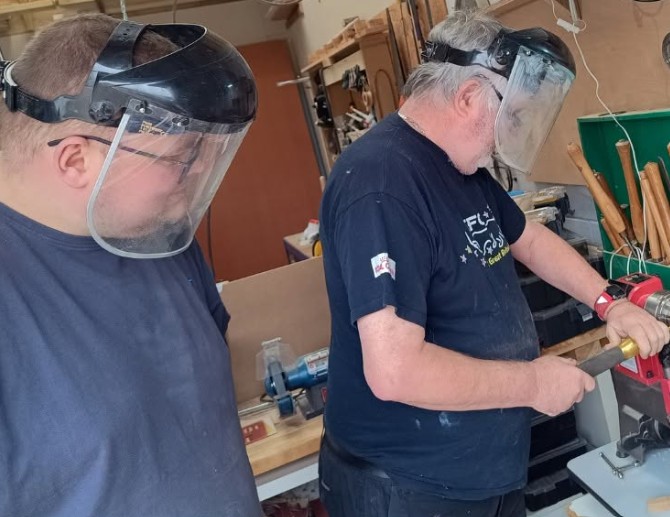
One of the biggest lessons I learned is that recovery isn’t about becoming the person you were before. It’s about moving forward with a better understanding of yourself. Your capacity may change, your boundaries may be stronger, and your priorities may look different—and that’s okay.
If you’re standing outside that door, wondering whether to return to a group, workplace or community activity, remember this: the stories anxiety tells us are not always true. You do not need to be fully recovered. You do not need to explain every detail of your absence. You only need to take the first step.
For me, returning to meaningful community activity was not the end of recovery—it was part of recovery. It reminded me that healing happens through connection, contribution and belonging. Most importantly, it reminded me that true community isn’t about being present only when life is going well. It’s about being welcomed back when it isn’t.
If you are recovering from mental illness, take a look at some of the activities and services local to you on the How Are You Cambridgeshire & Peterborough websites – you will get a warm welcome and encouragement from people who care. You might also be interested in attending Cambridgeshire & Peterborough NHS Foundation Trust’s RCE Wellbeing Hub (formerly Recovery College East), which offers short bitesize courses, online and face-to-face, on a variety of topics aimed at helping people look after their health and wellbeing.
#HelpingYouLookAfterYou
